Showing posts with label Book Review. Show all posts

Thursday, March 5, 2015

Angels At The Gate (a book review)


In Angels At The Gate, another nameless woman from the bible comes to life under T.K. Thorne’s deft hand.  An amazing storyteller, Thorne takes us back in time to 1748 BCE.  It is the time of Abraham, of Lot, of men believed to be angels and messengers of God, and it is the time of the infamous Sodom and Gomorrah.

As she did in Noah’s Wife, Thorne gives us a brilliantly imagined alternate history. She gives a face, a name, a life to another faceless, nameless woman of the bible. Here it is Lot’s wife - Adira.

We follow the fortunes of this young woman.  Called Adir, a male’s name, Adira is raised as a boy.  As member of her stern but loving father’s caravan, she is schooled in the art of trade negotiations, the languages of the people in the lands they traverse, and duty.  Under the sterner hand of the caravan’s cook, Chiram, she learns the meaning of hard work, loss and loyalty.

She observes and appreciates the freedom allowed her male persona, which the females around her will never know.  The woman in her stirs; however, every time the tall blue-eyed stranger comes near. Though the man and his brother are thought to be messengers of god, she cannot help the feelings and the fervent wish, at least for him, to reveal the woman she is.

Adira’s father sees his daughter coming to an age where her womanhood becomes obvious.  It is a dangerous thing among the tribes, this deception.  A woman would be put to death for daring such.  He tells Adira she must go live with women relatives, but Adira balks and gets her way to stay one more time.

The reprieve is cut short all too soon, and her cherished childhood comes to an abrupt end.  The life she knew and people she loved are ripped away.  With only her faithful and much loved dog, Nami, she embarks on a path in pursuit of the messengers of god.  The winding path takes her through trials and triumphs, and eventually to Lot’s house and Sodom.  To tell you more would require a ‘spoiler alert’ and I will not do that.

Thorne’s agile imagination and extensive research, give Adira a believable history - a name, a life and a story worthy of writing and reading about.  Here we have the story of the woman who would be Lot’s wife, Adira, imagined as it could have been, and who can say Thorne didn’t channel it as it really was.


Saturday, February 28, 2015

The Edge of Dreams (a book review)

Book Review
The Edge of Dreams,by Rhys Bowen

Rhys Bowen’s latest book in her Molly Murphy mystery series, The Edge of Dreams, has a serial murderer on the loose in New York City. The murderer is taunting the police with letters directed to Molly’s police captain husband, Daniel Sullivan. Much to Daniel’s chagrin Molly is brimming with ideas and champing at the bit to get involved.

She can’t help herself. Although some years ago she arrived a fresh-off-the boat immigrant, Molly soon found herself apprentice to a private investigator. When he was murdered, Molly successfully ran the business herself. It’s now 1905 and Daniel had hoped marriage and motherhood would keep her safely home as a good wife. He balks at what he considers her meddling, forbids her to get involved and refuses to discuss any part of the case with her, at least at first.

But Molly is too bright and persistent and has more ideas than he or any of his peers to be still for long. She slowly involves herself in the investigation exposing herself to dangers she's only seen on the edge of dreams.

I discovered this series in 2008 when there were seven books in the series. I started with Murphy’s Law when Molly, wanted for questioning for murder, flees the authorities in Ireland. She lands at Ellis Island where a fellow-traveller is murdered. Everyone is detained on the island as suspects, and intrepid Molly, determined to get on with her life in America, is determined to solve it herself. I read the whole series in a month and have eagerly awaited every new adventure.

The characters are well developed and alternate lifestyles are explored with a light touch. Each story is well plotted and includes historical events that give an authenticity to New York City and the country of that era. I like that Bowen gives her own possible solutions to some of history’s unanswered questions of the time.

Although each book can stand alone as complete, it’s always nice to know a person’s history. In case you want to read the entire series as well, below is a list in order of publication.


  • Murphy's Law (2001)
  • Death of Riley (2002)
  • For the Love of Mike (2003)
  • In Like Flynn (2005)
  • Oh Danny Boy (2006)
  • In Dublin's Fair City (2007)
  • Tell Me, Pretty Maiden (2008)
  • In a Gilded Cage (2009)
  • The Last Illusion (2010)
  • Bless the Bride (2011)
  • Hush Now, Don't You Cry (2012)
  • The Family Way (2013)
  • City of Darkness and Light (2014)
  • The Edge of Dreams (March 2015)


Friday, September 26, 2014

Enchanted Realms

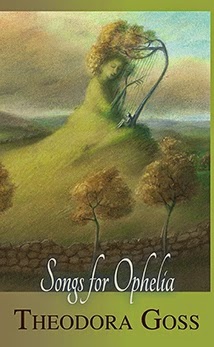
Songs for Ophelia by Theodora Goss. A book review by Perle Champion.

To call Theodora Goss’s book, Songs for Ophelia, a poetry book would not do justice to the stories that lie beyond the gossamer illustration gracing its cover.  This is a collection of hauntingly beautiful stories some new, some old retold – a storybook for grownups.

The term songs instead of poems suits this collection of prose stories.  It puts one in mind of the bards of old, who with lyre in hand, sang their tales.  In Songs for Ophelia, we accompany our own bard through enchanted realms, traversing the wheel of the year in the ancient way season by season, song by song.  Strewn through this collection are songs populated by names out of legend and myth whose stories we thought we knew full well until we read Goss’s deft retelling.  In her hands the stories are at once familiar and not.  She adds a depth as she explores and exposes possibilities giving each character and place a richer more well-rounded existence on the page
.
Reviewing poetry is so very different from reviewing a novel, so I’ve chosen to give a small glimpse of one poem from each season of Goss’s enchanted collection.

Spring: In The River’s Daughter, the river morphs from like a father to father in this homage to the death of a much admired writer. “She walks into the river/ with rocks in her pockets, / and the water closes around her/ like the arms of a father…”

Summer: In By Tidal Pools, Goss gives new dimension to Circe affair with Odysseus.  She elevates Circe from the flat stereotype of Homer’s telling to a fully imagined woman with real yearnings.  “At first she watched in case he should return/ by tidal pools…Does he lie on some shore/ where snails leave glistening tracks upon his eyes,/ or has he found his home?”

Autumn: In A Walk in Autumn, Summer becomes a maiden and slain.  Although I prefer to raise a glass to Persephone descending into hades, the imagery in this song is haunting.  “Her name was Summer – her hair the grasses/ her gown the forest’s leafy cloth… She lies unburied, exposed to weather/ in tattered garments the worse for wear…”

Winter: And lastly, there is The Last Night That She Lived.  Who has not pondered these lines in some variation? “When soul from form is rent,/ do streams run over stones/ in valleys of content?/ Or dust, on bones?”

Ray Bradbury once told me to read good poetry or an essay before turning out the lights at night.  He said he kept a good book or two of poetry or essays by his bed and read from one or the other volume every night. He said it turn the mind away from the noise and garbage of the day and prepared the mind for dream.

Since that conversation, I’ve followed that ritual with various volumes Gibran’s Sand and Foam, Leaves of Grass, and Rilke’s Book of Hours to name a few.  Each brings its own brand of dreaming. I’m adding Songs for Ophelia to that short list, perhaps to walk enchanted realms in dream. Thank you Theodora Goss.  

Perle Champion

Monday, October 31, 2011

The Nine Inheritors


[image]Clare Datnow’s novel, The Nine Inheritors, reads very much like a biography of ten generations as told by a keen-eyed on-the-scene observer. I enjoyed her omniscient point-of-view because I could journey with the characters as they each moved through their part of history.

Readers enter the story in 1790 Lithuania in the small village or shtetl of Valinsk. It is a place long-steeped in a caste system, where the clergy and the learned are considered superior to the tradespeople. Schmuel Rosen is a tradesman. For all his wealth, he is not high on the pecking order of the shtetl and it rankles, for he is a prideful, driven man.

Wanting desperately to rise above his station, Rosen arrives at the idea of commissioning a new Torah to loan, not give, the village synagogue or shul. For Rosen, the new Torah is not a pious act; it is a means of raising his station and that of his family. Datnow waxes very Michener-esque in her descriptions of all things Jewish, particularly the ritual involved in making a true Sefer Torah scroll—fascinating. In death, Rosen achieves his goal. He is buried in “the most prestigious part of the cemetery, on the higher ground of rabbis and scholars.” Thus begins the journey of the Rosen Torah as it passes from one generation to the next, surviving immigration across stormy seas, theft, fire, and more.

Datnow subtly but persistently uses questions in the telling of each generation’s story. The questions are asked and answered variously by each character as they inherit or come in contact with the Torah: If one does a good thing expecting personal gain, does this diminish the good thing, or is the good inherent in the good thing one did? What is the price of inheritance? When is inheritance a boon, when a burden? What is the value of holy writ in faith?

Here, the Rosen Torah is the good thing, that one holy of holies revered by the Jews and believed to be the original words spoken by God to Moses. Here we have ordinary people encountering the Torah. It is bartered, coveted, rejected, revered, and reviled as each person brings his or her own personal history to bear on the encounter.

The snake handler cannot read the Torah, but imagines it has magical powers. The KKK threatens its existence. One man’s interpretation of the Torah’s words causes him to disown his only son. The disowned son rejects any holy writ that causes his father to disown him.

Datnow asks questions to which there are no pat answers, as there are no pat answers in life. The readers may judge, or perhaps ask questions of their own. How could anyone do that? How could anyone think that? What place does faith have in life?

I enjoyed visiting the lives in The Nine Inheritors, while learning more than I ever knew about the evolution of Jewish life and thought.

 Previously published in the First Draft Magazine of Alabama Writers Forum